Description
Product Description

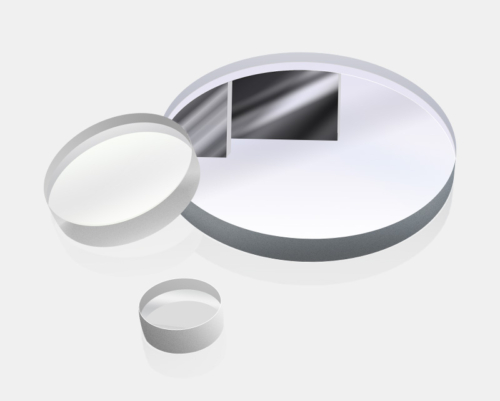
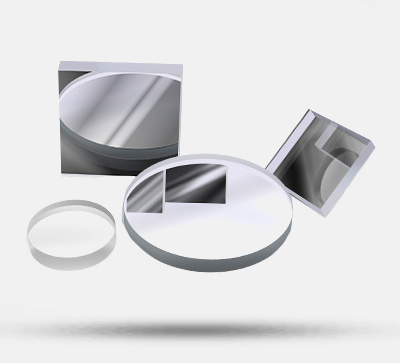
- When the incident angle of the ellipse is 45°, the obtained clear aperture is a circular aperture;
- The elliptical reflector can use two focal points to eliminate the need for multiple focusing elements in the assembly, and is suitable for turning light rays;
- The clear aperture obtained by a conventional circular reflector is only half, while the clear aperture of an elliptical lens can reach 100% of the circular aperture;
- Reflectivity is expressed as the average of the reflectivities of P-polarized light and S-polarized light. Reflectivity changes with the polarization state of the incident beam;
Aluminum-coated reflectors with a protective layer are a good choice for many conventional broadband applications. The silicon dioxide protective layer is used to protect the delicate aluminum film, making it suitable for laboratory and industrial applications. The elliptical reflector can use two focal points to eliminate the need for multiple focusing elements in the assembly. Due to its elongated major axis of the ellipse, it is suitable for bending and folding light rays with high precision angles and low wavelength distortion.
| Product Parameters | Parameter Information |
| Material | K9 Optical Glass |
| Coating | Single-sided aluminum film coating |
| Applicable Wavelength | 300-1200nm |
| Incident Angle | 45° |
| Dimensional Tolerance | +0.0/0.2mm |
| Thickness Tolerance | ±0.5mm |
| Surface Figure | λ/10@633nm |
| Surface Quality | 10-5 |
| Substrate Surface Figure Accuracy | λ/2 |
| Laser Damage Threshold | 0.25J/cm² (Pulse width 10ns, Repetition frequency 20Hz) |
| Back Surface | Fine Grinding |
| Protective Chamfer | 0.2-0.5mm*45° |
| Model | Parameters |
| TFA-E25.4 | Minor Axis 25.4mm, Major Axis 35.6mm; Thickness 5mm; |
Technical Description
– Reflector Series
A reflector is an optical element that works according to the law of reflection. Reflectors can be divided into three types according to their shapes: plane reflectors, spherical reflectors and aspherical reflectors; according to their reflective materials, they can be divided into metal film reflectors and dielectric film reflectors.
Metal reflectors are made by vacuum evaporating metal on a highly polished substrate, and then coating with silicon monoxide or magnesium fluoride. In special applications, because metal will cause losses and may oxidize in special environments, it can be replaced by a multi-layer dielectric film, which is a dielectric film reflector. The use of a reflector with high reflectivity can double the output power of the laser. In addition, since the reflector is the first surface reflection, the reflected image is not distorted and no double image appears, so it is widely used in optical high-fidelity scanning reflection imaging and machine vision imaging.
– Why Metal Reflective Films Are Often Equipped with Protective Films
Metal film reflectors are a type of reflector commonly used in scientific research experiments. The metal film of such reflectors is relatively “delicate”. Without a protective film, special care is required when taking and cleaning them. Do not touch the exposed metal film layer with your hands, otherwise the surface film layer will be scratched or oxidized. Therefore, our usual practice is to add a layer of silicon monoxide as a protective film layer on its surface. This not only improves the durability of the film layer, but also prevents oxidation of the film layer. Under normal circumstances, we can wipe it with a cotton swab dipped in a mixture of absolute ethanol and ether.
– Relationship Between Reflector Coating and Temperature and Humidity
Under normal circumstances, dielectric hard films and enhanced and protected metal films are not very sensitive to temperature, and the reflectivity changes little with temperature. Some even have no significant difference when used at -30℃~100℃. However, for dielectric film reflectors, due to the large number of film layers, if the surface film material is not well protected or the finish is not good (the wider the bandwidth, the worse the coating finish will inevitably be), the reflector will absorb moisture and water when exposed to the environment and change, and the reflectivity will inevitably be affected. This impact is much greater than that of temperature, so during use, the change in reflectivity caused by environmental humidity is largely greater than that caused by temperature. Metal films with good protection can relatively withstand some environmental changes, and a good protective layer can ensure that the internal metal layer does not undergo chemical changes.
– Laser Damage Threshold
With the widespread application of high-energy lasers in scientific research, the laser damage threshold of coated components has become a particularly concerned indicator for researchers. The laser damage threshold is an important parameter characterizing the ability of the medium irradiated by laser to resist laser damage. It is a critical value, that is, use exceeding this value will most likely cause local deformation or even complete damage inside or on the surface of the medium.
– Basic Principle of Optical Coating
Optical thin film technology is generally used to control the reflectance and transmittance of the substrate to the incident beam. Coating is a method of plating a layer of transparent dielectric film or a layer of metal film on the surface of the material by physical or chemical means. The purpose is to change the reflection and transmission characteristics of the material surface to meet different needs. To eliminate the reflection loss on the surface of optical components and improve imaging quality, coating one or more layers of transparent dielectric films is called anti-reflection film or anti-reflective coating. With the development of laser technology, different requirements for the reflectance and transmittance of the film layer have promoted the development of multi-layer high-reflection films and broadband anti-reflection films. For various application needs, polarizing reflective films, color beam splitting films, cold light films and interference filters are manufactured by using high-reflection films.
After the surface of the optical component is coated, light undergoes multiple reflections and transmissions between the film layers to form multi-beam interference. By controlling the refractive index and thickness of the film layer, different intensity distributions can be obtained, which is the basic principle of interference coating.

(1) Aluminum-coated reflectors with a protective layer are a good choice for many conventional broadband applications. The silicon dioxide protective layer is used to protect the delicate aluminum film, making it suitable for laboratory and industrial applications. In high-humidity environments, aluminum films with a protective layer are less likely to discolor than silver films with a protective layer, and the reflectivity is almost the same as that of bare aluminum films. The elliptical reflector can use two focal points to eliminate the need for multiple focusing elements in the assembly. Due to its elongated major axis of the ellipse, it is suitable for bending and folding light rays with high precision angles and low wavelength distortion.

(2) When the reflector is at a 45° angle, the minor axis length of the ellipse will become the effective clear outer diameter of the optical element.

(3) Mounting Options:
We recommend using our KCD1L series right-angle adjustment frames for mounting circular and elliptical optical lenses. Since the mounting plate is at a 45° angle to the standard horizontal position, this hole is equipped with a gap cut, which can provide the maximum clear aperture for any transmitted light and provide space for operating the installed optical elements. The difference between the elliptical and circular clear apertures is that the mounting frame for elliptical optical elements forms a larger clear aperture, while a Ø1-inch circular lens can only form about half of the clear aperture.


Assembly

Application Examples
Metal film mirrors are a type of mirror that we use more in scientific research experiments, and aluminized mirrors with protective layers are ideal for many broadband applications.