The interference and diffraction of light are core experiments in university physics optics, and the choice of equipment directly affects the experimental results and the achievement of teaching objectives. This article combines teaching requirements, experimental principles, and practical scenarios to analyze the logic and precautions of equipment selection from three aspects: light source, optical components, and observation and measurement tools, providing reference for experimental teaching and design.
I. Selection of Light Source
The light source is the basis of experiment, and its monochromaticity, coherence, light intensity stability, and beam divergence affect the experimental results. We need to combine experimental principles to find the most suitable light source.
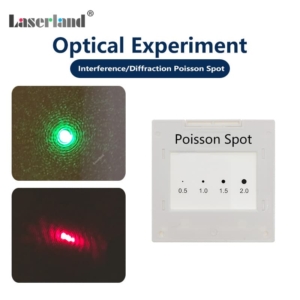
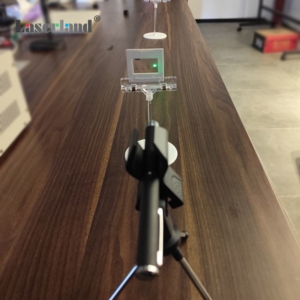
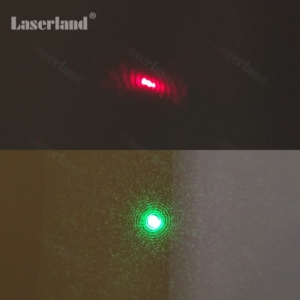
- Principles of selection
Interference experiments require high coherence of the light source, ensuring that the frequency and vibration direction of the two beams are consistent and the phase difference is constant; Diffraction experiments require slightly lower coherence, but good monochromaticity is needed. In addition, group experiments require stable, durable, and easy to operate light sources to avoid fluctuations in light intensity or frequent replacement. If used for student basic demonstration experiments, a monochrome laser pointer can be selected.
- Common light sources and adaptation scenarios
- He/Ne laser: The preferred light source is monochromatic red light, which has good stability, small beam divergence angle, and is suitable for most experiments such as double slit interference and grating diffraction. Please avoid direct laser exposure to the eyes.
- Sodium light lamp: Single color yellow light is preferred, with good coherence, suitable for basic experiments such as double slit interference and splitting interference. Short coherence length, stable illumination required.
- Incandescent lamp: multi-color light, poor coherence, only suitable for single slit diffraction color stripe demonstration, auxiliary qualitative understanding, cannot be used for quantitative measurement.
- Monochromatic light source: Small size, low power consumption, fast startup, single wavelength, which is suitable for basic experiments. But high precision constant current drive is required to ensure stable light intensity.
II. Selection of Optical Components
Optical components are the core of the optical path, including beam splitting, collimation, diffraction, imaging, and other types. Their accuracy and specifications need to match the experimental principles and measurement requirements to avoid experimental distortion or data deviation.
- Collimator and Beam Expander
- Beam expander: Expands the laser beam into a thin beam, often with magnifications of 10 × and 20 ×, to ensure uniform illumination, clear stripes, and ease of measurement. Need to match the aperture of the light source beam to avoid obstruction.
- Collimator mirror: In conjunction with a beam expander, it converts scattered light into parallel light, ensuring symmetrical diffraction fringes and improving measurement accuracy. It is necessary to match the characteristics of the beam expander mirror.
- Components for Interference and Diffraction
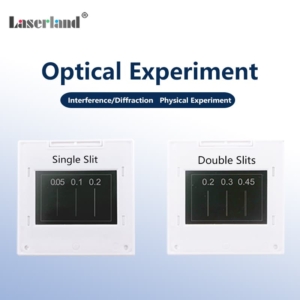
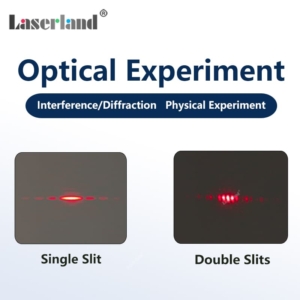
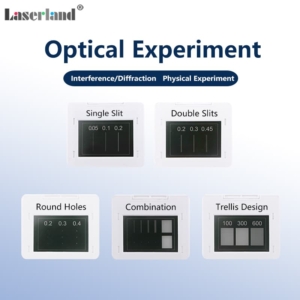
- Single slit: slit width 0.1-1.0mm, when equipped with a 1 meter observation distance, choose a slit width of 0.2-0.5mm to ensure clear stripes.
- Double slits/multiple slits: The core parameters are slit width (a) and slit spacing (d), commonly a=0.1-0.2mm and d=0.5-1.0mm. The selection should be based on the wavelength of the light source and the observation distance to ensure that the stripe spacing is moderate, and the flatness and parallelism meet the standards.
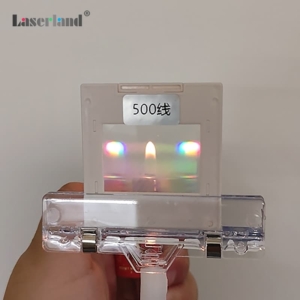
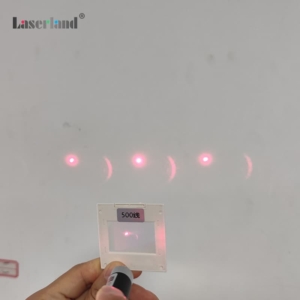
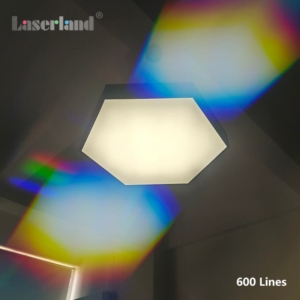
- Grating: The core parameter is the grating constant (d), commonly used as 1/300-1/600mm. The smaller the “d”, the larger the diffraction angle, making it easier to measure. When measuring unknown wavelengths, a transmission grating with high accuracy and known constants should be selected.

- Auxiliary Optical Tools
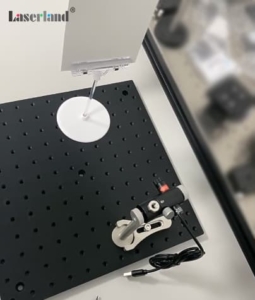
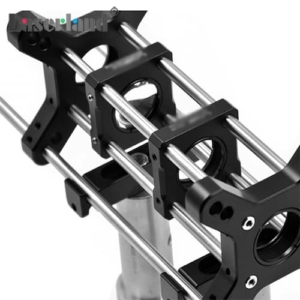
- Optical holder: fixed adjustment element, commonly used 100-200cm range, minimum division 0.5-1mm, requires smooth guide rail and accurate slider positioning.
- Reflection mirror/beam splitter: The reflection mirror should be smooth and highly reflective, and the beam splitter should have a uniform splitting ratio to ensure the contrast of interference fringes.
- Filter: Improve monochromaticity, match the center wavelength with the light source, pay attention to transmittance, and avoid insufficient light intensity.
III. Selection of Observation and Measurement Tools
Observation and measurement tools need to balance accuracy and practicality, meet error requirements, adapt to students’ operational abilities, and avoid data bias.
- Observation Tools
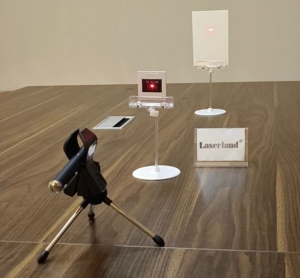
- Observation screen: The white observation screen has high reflectivity, and the frosted glass is easy for multiple people to observe/shoot. It needs a flat surface and uniform color.
- Measuring Tools
- Vernier caliper/scale: The precision of the vernier caliper is 0.02-0.05mm (for measuring small sizes), and the scale has a division of 1mm (for measuring large sizes), which can be matched as needed.
- Spectrometer: measure diffraction angle/deviation angle, with a minimum division of 1 ‘, requiring easy adjustment, clear reading, and calibration before use.
- Power Meter: Quantitatively measure light intensity distribution, suitable for advanced experiments, requiring range adaptation, accuracy compliance, and fast response.
IV. Precautions
- According to Experimental objectives: Conventional experimental equipment is selected for basic experiments, and high-precision equipment is required for advanced exploration.
- Balancing costs: matching funds with needs, selecting cost-effective equipment for basic experiments, and equipping high-precision equipment for advanced experiments.
- Pay attention to equipment compatibility: matching component interfaces, sizes, and optical sockets, adapting light source wavelengths to filters and gratings.
V. Conclusion
The selection of equipment should be based on experimental principles, combined with comprehensive considerations of goals, accuracy, practicality, and cost. Reasonable selection can ensure the effectiveness of experiments, help students understand the volatility of light, and enhance their experimental and exploratory abilities. In teaching, students can be guided to independently analyze and choose logic, cultivating their awareness of design and innovation.